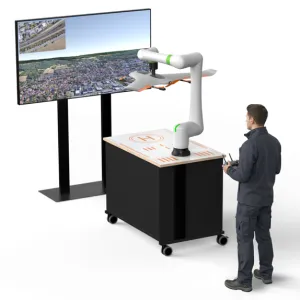

Unmanned Aerial Vehicles (UAVs) – Understand, configure and systematically diagnose UAV systems
Exhibitor
Lucas-Nülle GmbH
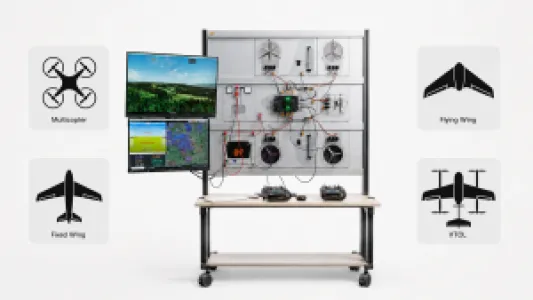
With the PanelTrain for unmanned aerial vehicles, learners develop practical skills for the setup, configuration and diagnosis of modern UAV systems. All essential subsystems are clearly arranged on one training wall. This makes signal paths, wiring and the interaction of individual components visible and easy to understand.
The training follows the principle of complete action. Learners work on practice-oriented assignments using real UAV components. They wire the system, calibrate sensors, configure actuators and the remote control, and systematically analyse faults. Six consecutive learning projects guide the competence-building process step by step.
From Individual Components to a Complete UAV System
The training wall combines a flight controller, ESCs, brushless motors, GPS/GNSS, sensors, telemetry, power distribution and remote control in a clearly structured learning environment. Learners understand the function of each component and how they work together as a complete UAV system.
Four different UAV configurations can be explored using the same hardware: quadcopter, fixed wing, flying wing and VTOL. The differences are created through software configuration. Learners can configure, test and compare the different platform concepts.
Configure, Calibrate and Control
For configuration and diagnostics, learners work with ArduPilot and Mission Planner or QGroundControl. They calibrate the IMU, compass and barometer, assess GPS signals and commission the system step by step.
Using the RadioMaster TX16S and EdgeTX, they configure control channels, flight modes and safety functions. This turns theoretical system knowledge into practical competence.
Identify Faults and Make Informed Decisions
Training does not end with commissioning. Learners perform readiness checks, carry out electrical measurements, analyse log files and troubleshoot software-related faults. In this way, they develop a structured approach to diagnostics and maintenance and learn how to assess the technical condition of a UAV system.
This is Real Experience Learning: understanding complex UAV technology by building, configuring, testing and diagnosing real systems.
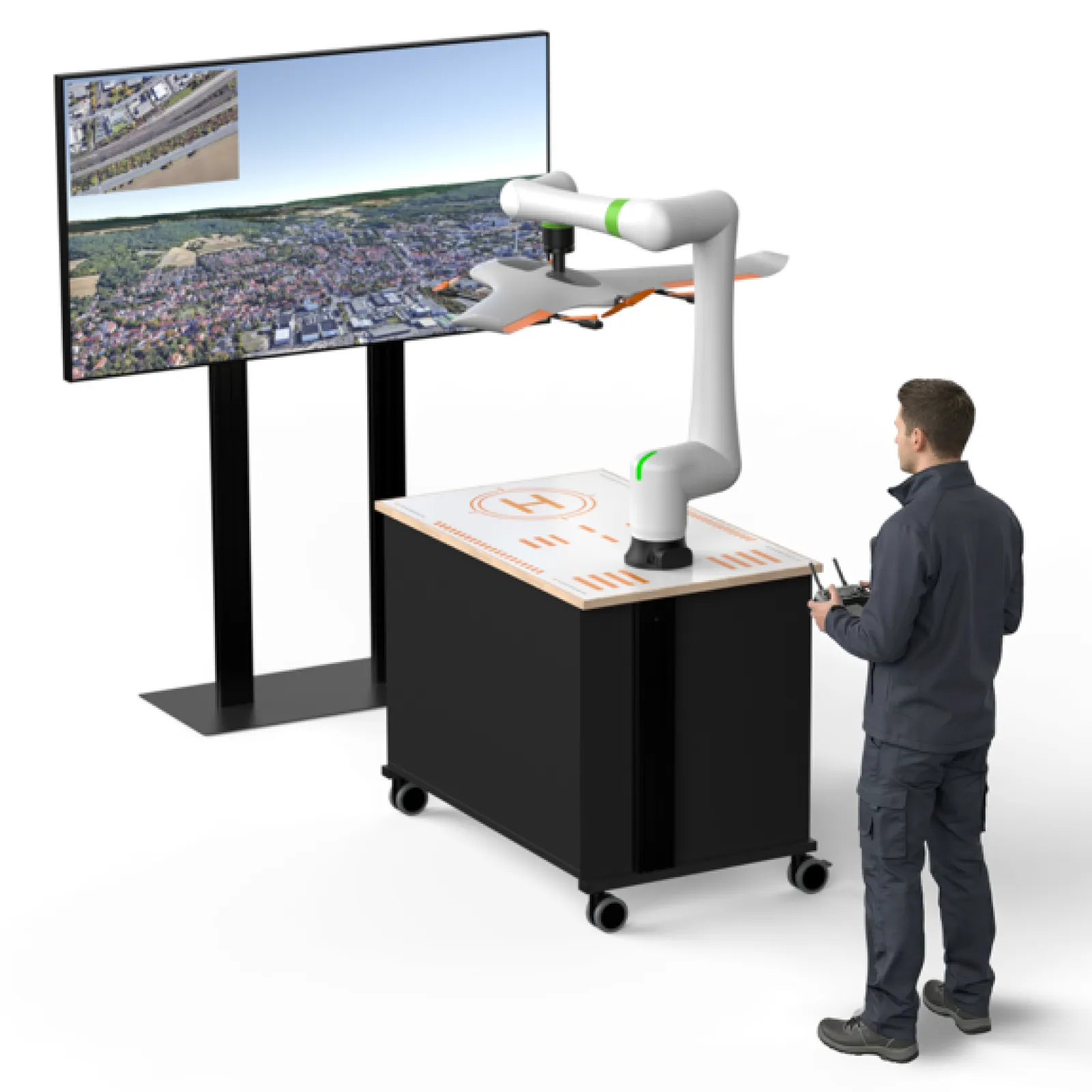
Unmanned Aerial Vehicles (UAVs)